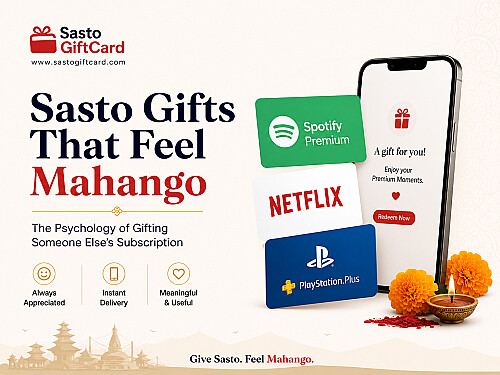

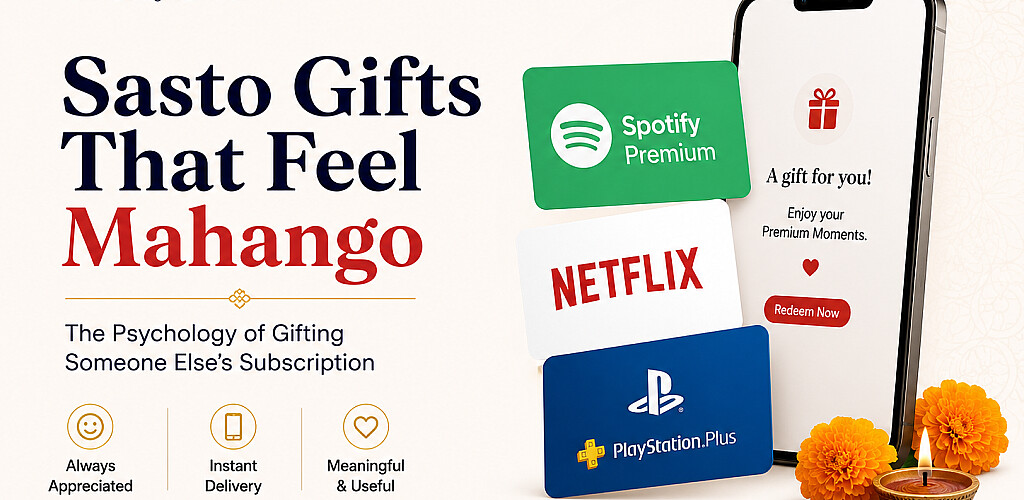
Sasto Gifts That Feel Mahango: The Psychology of Gifting Someone Else’s Subscription
- Posted by: Sasto Gift Card
Picture this: Dashain is three days away, and you’re standing in a crowded Bhatbhateni aisle, clutching a Rs. 2000 sari you’ve second-guessed four times. Will your sister-in-law like the shade of red? Is the fabric too heavy for Kathmandu’s autumn? Did she already buy this exact design last Tihar?
Now picture the alternative. You pull out your phone, spend 90 seconds on a gift card website, and send a $10 Spotify Premium code. She redeems it instantly, texts you a smiley face, and spends the next three months streaming ad-free music thinking of you every time her favorite song plays.
This is the quiet revolution happening in Nepali gifting culture. It’s not about spending more. It’s about giving something that lands exactly right. Here’s why cheap, digital gift cards often feel far more mahango (valuable) than expensive physical presents, and why this matters for anyone navigating the intricate social obligations of a Nepali household.
The Heavy Weight of Gifting Anxiety in Nepal
Gifting in Nepal isn’t a casual act. It’s woven into festivals, family visits, and delicate social diplomacy. Whether it’s Dashain dakshina, a Tihar mithai box, or a wedding ko saree for the new Bhauju, the pressure to get it right is immense.
This breeds what psychologists call "gifting anxiety" the stress of choosing a present that accurately reflects your relationship, your respect, and your understanding of the recipient’s taste. The more expensive the item, the higher the stakes. A costly silk sari in a color she dislikes doesn't just miss the mark; it silently announces, “I don’t really know you. The Rs. 2,000 becomes a monument to effort without connection.
Now consider the brother-in-law you meet twice a year. He’s polite, smiles at your jokes, but you have zero clue what he actually wants. A shirt? Wrong size. A wallet? He’s loyal to his 10-year-old battered one. A bottle of whiskey? Maybe he’s quit drinking. The guesswork is a minefield.
Why a $10 Gift Card Hits Harder Than a Rs. 2000 Sari
The magic lies in a psychological principle called “perceived utility.” When you give someone a specific digital subscription to Spotify, Netflix, PlayStation Plus you’re giving them a key to an entire world they already love. You’re not guessing; you’re funding their existing joy.
Here’s the breakdown:
1. Certainty Over Surprise
A physical gift is a gamble. The recipient opens it, forces a grateful smile, and secretly calculates where to re-gift it. A digital gift card for a service they use removes the gamble entirely. It’s a 100% guaranteed hit. You knew they listen to music, so you gave them three months of ad-free listening. No wrong colors, no awkward exchanges.
2. The Luxury of “Free” Experience
Paying for a tangible item feels like a transaction. Gifting a subscription feels like unlocking a premium tier of life. With a $10 Spotify card, you’ve given hundreds of hours of uninterrupted audio a daily luxury that feels extravagant but costs you very little. That Rs. 2000 sari might be worn once. That $10 gift card delivers joy for months. The mental mahango factor comes from the duration of the experience, not the price tag.
3. It Solves a Real, Recurring Annoyance
Think about the ads on a free Spotify account the same jingle screaming between every Nepali playlist. Or the frustration of a Netflix profile getting hijacked by cousins. A gift card says, “I understand your small daily frustrations, and I’m fixing them.” That level of empathy is priceless. It’s far more intimate than a generic, expensive gift.
4. The “Treat Yourself” Permission
Many Nepalis, especially from a frugal middle-class background, hesitate to buy digital subscriptions for themselves. It feels indulgent. A Rs. 500 mobile top-up is necessary; a Rs. 500 Spotify or Google Play recharge feels like a guilty pleasure. When you gift it, you grant them permission to enjoy something guilt-free. You become the enabler of their happiness a powerful gifting position.
Digital Gifts: The Ultimate Brother-in-Law Strategy
Let’s return to that brother-in-law. You don’t know his shirt size, his alcohol preference, or his brand of shoe polish. But you can make a highly educated guess about one thing: he owns a smartphone, and he’s bored or entertained on it.
- Is he a slightly glazed-eyed commuter? A Spotify or YouTube Premium gift card saves his data and sanity.
- Does the whole family binge-watch the same Netflix profile? A Netflix gift card funds the next family movie night, earning you invisible brownie points with the entire household.
- A younger, gaming-obsessed sala? A PUBG UC or Free Fire diamonds gift card will make you a legend.
- Even the serious, work-oriented type? A Google Play or Apple Gift Card lets him buy a productivity app, an audiobook, or extra cloud storage practical, thoughtful, impossible to mess up.
You’ve transformed from the relative who hands over a blurry envelope into someone who “gets” him. The sasto price (as low as $5) belies the mahango impact.
The Science of Gifting Subscriptions: Less Clutter, More Meaning
There’s another cultural shift at play. Nepali homes, especially in cities, are drowning in things. Another set of fancy glasses, another wall clock, another decorative Ganesh statue. Physical gifts demand storage, accumulate dust, and often become subtle burdens.
Digital gifts are weightless. They contribute to “experiential gifting” the global trend of giving experiences over objects. Research consistently shows that experiences bring longer-lasting happiness than material goods. Your Spotify gift card doesn't just give songs; it gives stress relief during a jam, energy during a workout, nostalgia during a lonely night. It's an experience that echoes.
Why Your Gift Card Website Is the Solution (Not Just a Shop)
Now, you might wonder: why buy a digital gift card from a specialized platform when you could theoretically transfer cash via eSewa? Because gifting cash, especially within families, carries awkward baggage. A crisp Rs. 500 note in a puja thali is dakshina a ritual blessing, not a personal treat. Sending a bank transfer for a birthday feels transactional, cold.
A dedicated gift card beautifully presented with a redemption code, sometimes delivered via email with a personalized message bridges the gap. It packages the exact same monetary value into a deliberate, chosen gift. It says, “I specifically wanted you to enjoy this.” Cash says, “Here, figure it out yourself.” A Spotify code says, “Go listen to your favorite band non-stop.”
For the sender, it’s a 2-minute, stress-free purchase. For the receiver, it’s a curated token of understanding.
How to Master the “Sasto-Mahango” Gifting in Your Life
- Audit Their Digital Life: Listen for complaints. “Too many ads,” “my storage is full,” “I can’t watch the new season.” These are golden clues.
- Match the Card to the Festival: A Google Play Gift Card during Dashain is perfect for kids getting new tablets. An Apple Gift Card before Tihar helps a cousin buy that photo editing app for the festival's snaps. A Netflix Gift Card for a newlywed couple’s first winter is genius.
- Presentation Still Matters: Even digital gifts need a Nepali touch. Send the code via WhatsApp with a Tihar greeting. Schedule the email delivery for the morning of the festival. Mention in a call, “Check your inbox, I sent you something small to enjoy with chiya.”
- Start Small, Win Big: No need for a year-long subscription. A 1-month or 3-month digital card is the perfect low-commitment experiment. See the joy, become the favorite relative, and scale up next festival.
Turn Gifting Anxiety into Gifting Confidence
Nepali gifting culture is beautiful because it’s about maintaining bonds. But too often, the execution gets tangled in materialism and guesswork. The rise of digital gift cards offers a graceful escape. It allows you to give a sasto gift that carries the emotional weight of a much more expensive, deeply considered present.
So this season, when you’re scratching your head over what to give the brother-in-law, the cousin in Sydney, or the friend who has everything, skip the mall. Embrace the psychology of giving the subscription they secretly long for. Your Rs. 2,000 might buy a sari that stays folded. But your Rs. 1,000 Spotify card will accompany them through traffic jams, gym sessions, and late-night work a tiny, relentless reminder that you, among all, knew exactly what they needed.
Ready to become a gifting legend? Browse our curated collection of digital gift cards from Spotify and Netflix to gaming top-ups and send the perfect mahango feeling in minutes, even from halfway across the globe.
Frequently Asked Questions
Q: Are digital gift cards like Spotify or Netflix usable in Nepal?
A: Absolutely. Spotify Premium gift cards can be redeemed on existing Nepali accounts, and Netflix gift cards work by adding credit to any account accessible from Nepal. Always check the region specification (global cards work fine), and you can buy Nepal-compatible gift cards directly from our store.
Q: How do I send a gift card to someone who isn’t tech-savvy?
A: After purchase, you get a code. Simply share that code via SMS, WhatsApp, or even write it on a greeting card. For Netflix or Spotify, they just enter the code in their account settings. No banking app needed.
Q: Can I buy a gift card for myself?
A: Many Nepalis do! It’s the easiest way to pay for subscriptions without an international credit card. Buy a Google Play, Apple, or gaming gift card and load your own wallet — your next PUBG skin is on you.
Q: Is a digital gift card really a “proper” gift during Dashain or Tihar?
A: Culture evolves. The core tradition is giving something to express love and respect. A digital gift that enhances the recipient’s daily life aligns beautifully with that spirit, and younger generations especially appreciate the thoughtfulness over clutter.
Embrace the future of Nepali gifting. Give sasto, feel mahango.




Comment